The All-I-Want State of Mind
The Screwtape LettersThe All-I-Want State of Mind names the patient’s mother’s particular form of gluttony: she appears to want very little, yet insists on having it prepared to an exacting standard. Because her appetite presents itself as restraint, she does not recognize how her pursuit of small, preferred pleasures makes other people accommodate her and steadily damages her relationships.
The Disguise of Modesty
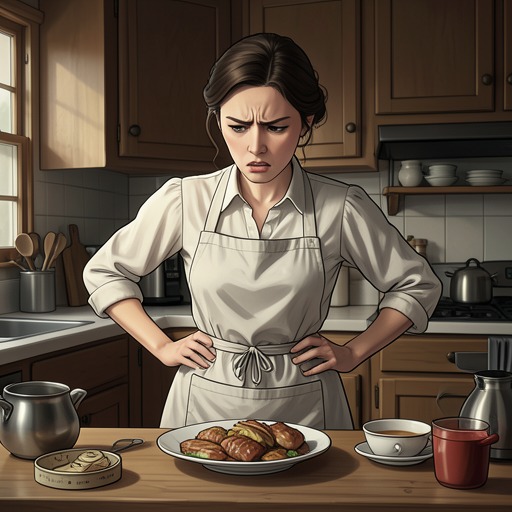
Screwtape explains that the patient’s mother is not chiefly captured by the size of her meals. Her appetite is concealed by small quantities and the appearance of temperance. She turns from what has been offered to request a cup of tea that is weak but not too weak and a very small piece of crisp toast, framing the demand as modest even though fulfilling it may trouble others. In a crowded restaurant, she protests that the portion set before her is far too large and asks for only a quarter of it. If challenged, she would describe this as avoiding waste; Screwtape identifies the real cause as distaste for seeing more food than she wants.
That contrast between little and exact is the expression’s defining irony. The mother seems to be asking less, but the smallness of the request does not make it unselfish: she remains determined to get precisely what she wants. At the moment she indulges her appetite, she understands herself to be practicing temperance.
The Demand for What Is “Properly” Done
Screwtape describes the mother as living in an “All–I–want” state of mind. Her stated wishes are simple—a properly made cup of tea, a properly boiled egg, or properly toasted bread—but “properly” conceals an insatiable demand for exact, nearly impossible pleasures of the palate. She imagines these standards as memories of an earlier time, calling it “the days when you could get good servants.” Screwtape offers a different explanation: her senses were then easier to please, and other kinds of pleasure made her less dependent on food.
The appeal to the past therefore does not resolve her dissatisfaction. No servant or friend can reliably meet a standard that rests on an idealized memory and an exactness she does not acknowledge. The apparently modest request becomes an ongoing test others are likely to fail.
Effects on Others and the Demonic Method
The pattern has consequences beyond the table. Daily disappointment produces daily ill temper; cooks give notice, and friendships cool. Screwtape credits Glubose with years of unobtrusive work that have allowed the mother’s appetite to dominate her life. The effectiveness of that influence lies partly in its invisibility: she does not see the demands as greed because they involve little food and can be described as having things prepared properly.
When the Enemy gives her even a faint suspicion that she is too interested in food, Glubose redirects her concern. The mother tells herself that she does not mind what she eats, but likes things nice for her boy. Screwtape insists that her greed has instead been a chief source of her son’s domestic discomfort for years. The expression thus links self-excusing appetite to an inversion of care: a claim made in the name of pleasing her son masks conduct that troubles him.
Meaning and Wider Use
Screwtape uses the mother’s example to distinguish this disguised fastidiousness from conspicuous excess. It shows how appetite can evade moral scrutiny when it presents itself as refinement, thrift, modesty, or solicitude. The key is not how much food is consumed, but the insistence that others satisfy a private standard—and the irritability and uncharitableness that follow when they cannot.
The episode also sets out why this state matters to the demonic strategy: a denied indulgence can put a person out, leaving charity, justice, and obedience vulnerable. The mother’s case is not merely a portrait of fussiness. It demonstrates how a small, seemingly harmless preference can become a governing demand precisely because its owner mistakes insistence for restraint.